Getting NCover and NUnit to play nicely with .NET 4.0
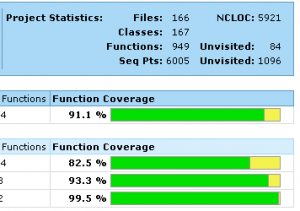
Today I spent a great deal of time pulling my hair out in an attempt to get code coverage working for an application I'm developing at my place of employment. In an effort to hopefully prevent myself and others from enduring the same degree of pain and suffering, I am documenting my findings below and how I got it working.
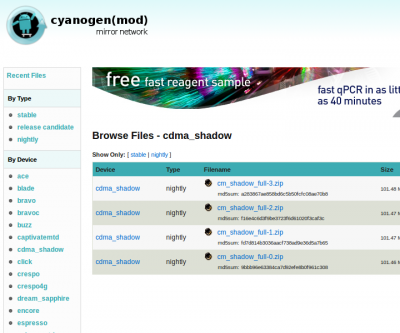
CM7 Droid X nightlies go live!
Last Sunday night, I was successful in getting CyanogenMod 7 booting on my Motorola Droid X using 2nd-init for the very first time. Now today is the Saturday, and in just under a week's time we've had quite a roller-coaster ride. We've gone from a video (which received much praise but also much speculation), to a beta release only a few days later, to being officially merged into the CM tree, to now having nightly builds available for all. And that was all in…
2nd-init. What it is and how it works.
So over the past few days, with all of the CM4DX hype, a lot of people have been asking what this 2nd-init thing is that solved all of the problems in DX land and made the world suddenly fill with sunshine and win. Well, I've decided to do a little write-up on that very subject.
Time to wipe data/cache!
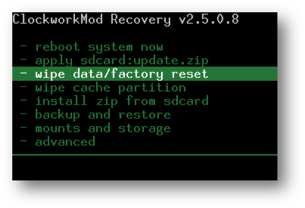
So a few months ago I was approached by some members of the community who asked me to do a write up on the notorious multiple data wiping that people seem to be doing to their devices. It had become a common thing to have install instructions on ROMs to include phrases such as:
The trials of project omaha
So today I spent the day looking into a certain little gem of open source software, courtesy of Google, called Project Omaha.
So what is omaha?
Some of you might not know it, but when you install any Google app on your computer, you aren't actually downloading that app, but instead downloading the Google Updater, with a tag that identifies which app you're looking for.
Thunderbolt assistance
This is a bit of a shorter post but is also one of the more fun ones!
Sometime last week slayher of the CM for Thunderbolt team put a call out to see if anyone was interested in joining the TB team to try and get it ready for nightly status.
1% battery increments for sholes
Yes, you read that right, but before you get all excited, let me give some background on what's going on here.
A few days ago, I received a query about whether or not 1% battery percentages would be possible on sholes, after
Libaudio nears testing stages
I have a frame built for the libaudio driver, and am now in the process of merging it into the source tree to start building it and then testing it. It is still missing a lot of core IO control code to actually communicate with the CPCAP audio driver, as a lot of that will be trial and error.
So what about 3G on sholes?
So a lot of people are probably wondering why I haven't updated in awhile. I actually am hoping to start updating this blog more often but with shorter blog posts in order to try and keep up with all of the crazy stuff I'm up to lately!
Let's get this thing started again!
So as promised, this blog post will be about my work with CM and, in particular the state of the Motorola Droid and Motorola Droid X. I'll also throw in a few more things here and there to spice things up if that's what you fancy.